


Before placing a bulk order, evaluating a wooden toy sample is an important step for buyers, importers, and retailers.
A sample provides an opportunity to check whether the product meets the expected specifications, quality standards, and market requirements.
A careful evaluation can help identify potential issues early, reduce production risks, and ensure that the final products are consistent with the approved sample.
Here are six key aspects to consider when evaluating wooden toy samples before bulk production.
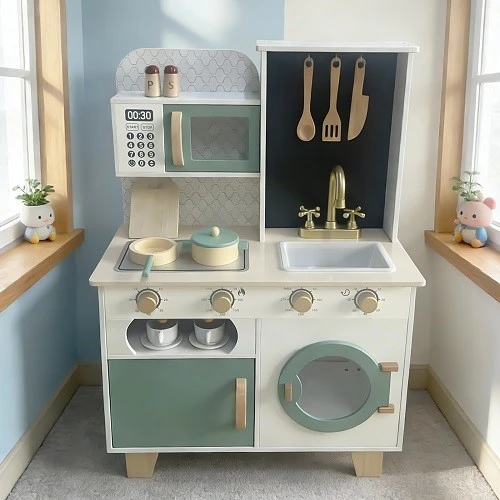
1. Check the Materials and Construction
Start by checking the materials used in the sample. Different wooden toys may be made from solid wood, plywood, MDF, or a combination of materials. Buyers should confirm that the materials match the agreed specifications.
Pay attention to the following details:
1.Whether the wood material matches the approved requirements
2.Whether the product structure is stable and properly assembled
3.Whether joints and connecting parts are secure
4.Whether there are visible cracks, warping, or loose components
For products such as wooden dollhouses, play kitchens, and children's furniture, structural stability is particularly important.
2. Inspect Surface Finishing
Surface finishing affects both the appearance and overall quality of wooden toys.
When inspecting a sample, buyers should check whether the surface is smooth and evenly finished. Pay attention to rough edges, visible glue marks, uneven paint coverage, and other surface imperfections.
For painted products, check whether the colors are consistent with the approved design. For natural wood finishes, examine whether the surface has an even appearance.
These details help determine whether the sample meets the expected product quality and appearance requirements.
3. Verify Dimensions and Product Specifications
Even small differences in dimensions can affect product assembly, packaging, and compatibility with other components.
Buyers should compare the physical sample with the approved drawings or specifications, including:
1.Overall product dimensions
2.Thickness of wooden panels
3.Size and position of openings
4.Placement of accessories and connecting parts
5.Color references and decorative details
For customized wooden toys, it is particularly important to verify all agreed specifications before approving the sample.
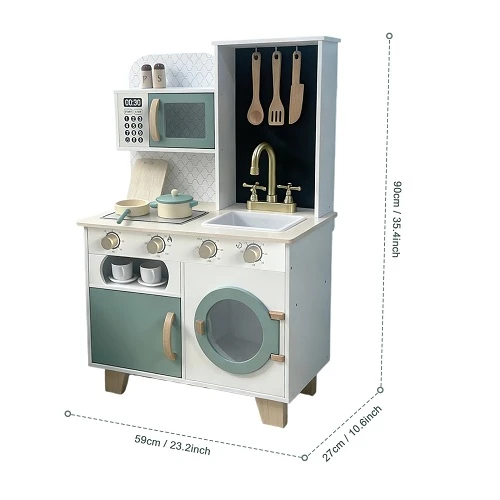
4. Test Functionality and Assembly
A wooden toy should function as intended and be easy to assemble when required.
Depending on the product type, buyers can check:
1.Whether doors, drawers, and moving parts operate smoothly
2.Whether removable accessories fit properly
3.Whether connecting parts are easy to install
4.Whether the product remains stable during normal use
5.Whether the assembly instructions are clear and easy to follow
For example, wooden play kitchens should have properly fitted doors and accessories, while dollhouses should have well-aligned panels and suitable room layouts.
5. Review Safety and Compliance Requirements
Product safety requirements should be considered before moving into mass production, especially when wooden toys are intended for children's markets.
Buyers should identify the applicable regulations and testing requirements for their target markets.
Depending on the destination, relevant standards may include EN 71 for the European market and ASTM F963 for the United States.
Check whether the materials, coatings, small components, and overall product construction meet the agreed safety requirements.
It is also important to confirm whether additional laboratory testing or documentation is required before shipment.
A sample inspection alone does not replace formal product testing where applicable.
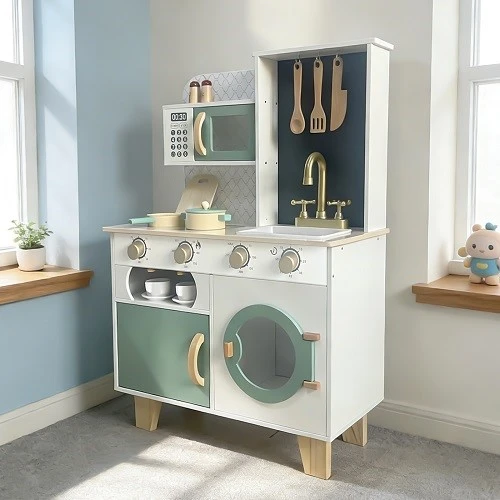
6. Confirm Packaging and Bulk Production Details
The product sample is not the only aspect that requires approval. Packaging should also be reviewed before bulk production.
Buyers should confirm:
1.Individual packaging materials and box dimensions
2.Protective materials used inside the carton
3.Product arrangement and assembly requirements
4.Barcode, logo, and labeling specifications
5.Carton strength and suitability for transportation
Once the sample and packaging details are approved, both parties should keep a record of the confirmed specifications as a reference for mass production.
Final Thoughts
Evaluating wooden toy samples before bulk production helps buyers identify potential issues, confirm product specifications, and establish clear quality expectations.
A well-organized sample approval process can also improve communication between buyers and suppliers, making the transition from sample development to mass production more efficient.
Before confirming a bulk order, make sure that the materials, construction, finishing, dimensions, functionality, safety requirements, and packaging have all been reviewed and approved.

